
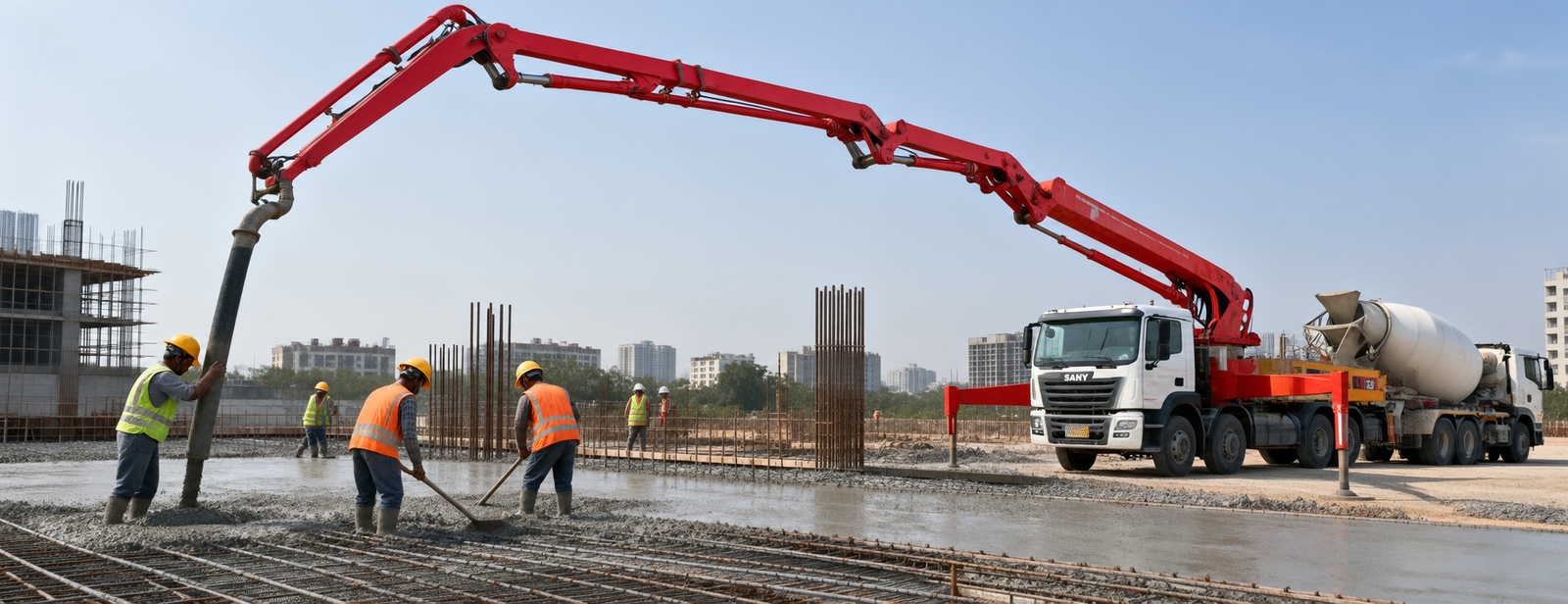
Concrete placement is an important part of every construction project, especially when working on large structures, elevated areas, or sites with limited access. Traditional concrete handling methods can require additional labour and time. Concrete pumps provide a more controlled and efficient way to move concrete from the delivery point to the required location.
What Is a Concrete Pump?
A concrete pump is specialized equipment used to transport and place concrete through a connected pipeline or hose. It allows concrete to be delivered directly to the required area, making the placement process more convenient and reducing unnecessary manual movement.
Key Benefits of Concrete Pumping
Faster Concrete Placement
Concrete can be transferred quickly to the required location, helping construction teams maintain a smoother workflow.
Better Reach
Pumping equipment can help deliver concrete to elevated, distant, or difficult-to-access areas.
Reduced Manual Handling
Less manual transportation of concrete can help reduce labour requirements and improve site organization.
Improved Productivity
A consistent concrete supply allows workers to focus on placement and finishing activities while reducing interruptions.
Where Are Concrete Pumps Commonly Used?
Concrete pumps are suitable for:
- Residential buildings
- Commercial construction
- High-rise structures
- Foundations
- Bridges
- Industrial projects
- Infrastructure development
- Large concrete works
Why Rent a Concrete Pump?
Not every construction project requires permanent ownership of heavy equipment. Renting a concrete pump allows contractors and project teams to access suitable equipment according to project duration and requirements without maintaining their own equipment fleet.
Conclusion
The right concrete pumping solution can make concrete placement more organized, efficient, and practical. Selecting equipment according to project requirements, site conditions, concrete volume, and required reach can help support smoother construction operations.